

Complete Guide to BIS ISI Mark Certification in India: Process, Documents, Cost & Benefits
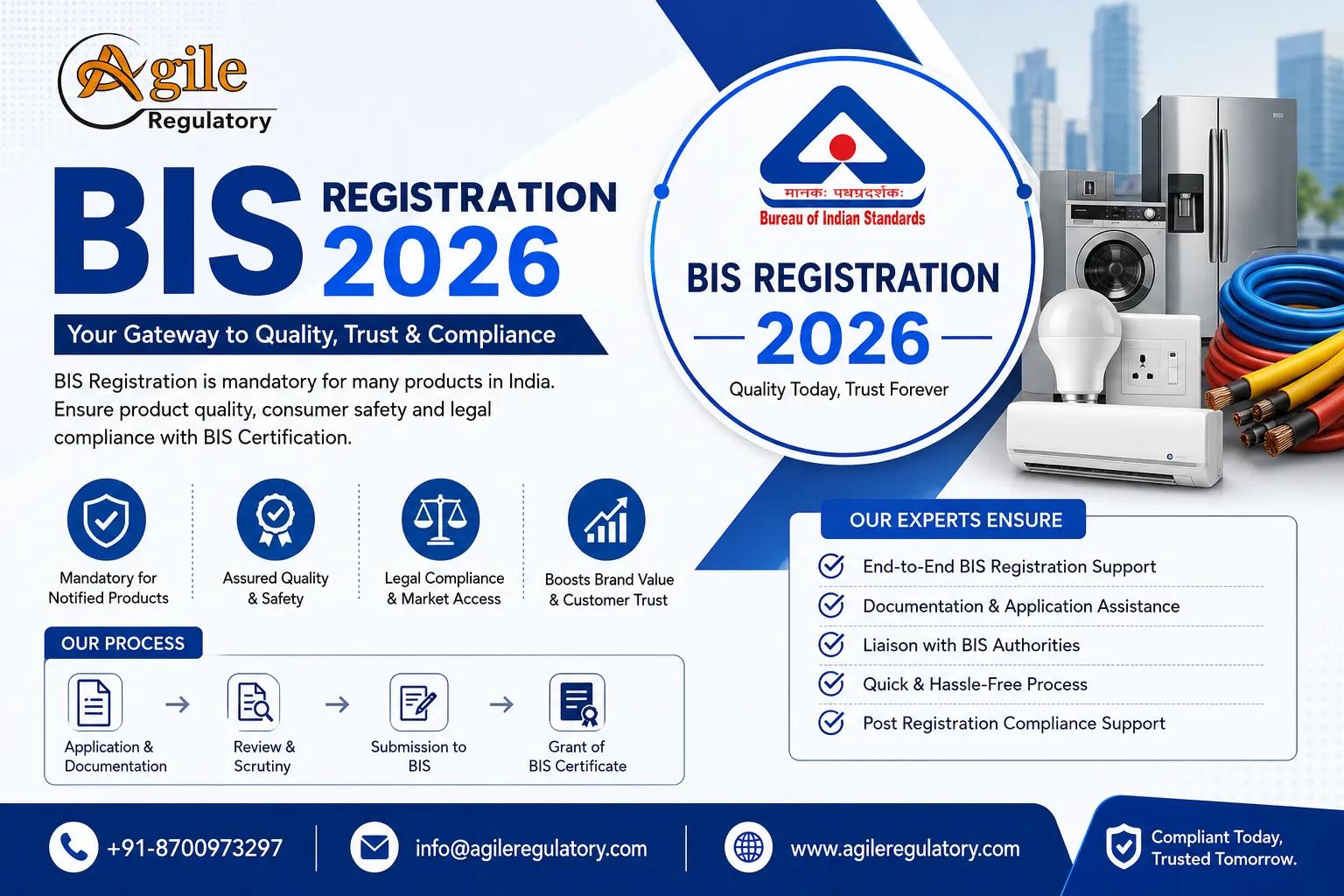
India has one of the world's most comprehensive product quality compliance systems. For manufacturers and importers, obtaining BIS ISI Mark Certification is often a mandatory requirement before products can be manufactured, imported, or sold in the Indian market. Products covered under Quality Control Orders (QCOs) cannot be legally marketed without the required BIS licence and ISI Mark.
Whether you are a domestic manufacturer or an overseas company planning to enter the Indian market, understanding the certification process can save both time and compliance costs.
What is BIS ISI Mark Certification?
BIS ISI Mark Certification is a product certification scheme operated by the Bureau of Indian Standards (BIS). The ISI Mark signifies that a product complies with the applicable Indian Standard (IS) and meets prescribed safety, quality, and performance requirements.
The certification is granted under Scheme-I of the BIS Conformity Assessment Regulations and is mandatory for hundreds of products notified under various Quality Control Orders issued by different ministries.
What is an ISI Mark?
The ISI Mark is India's most recognized quality certification mark.
It indicates that:
The product complies with the relevant Indian Standard.
Manufacturing is regularly monitored by BIS.
Products undergo laboratory testing and quality verification.
The manufacturer maintains a quality management system.
Every certified product carries:
ISI Logo
Applicable IS Standard Number
BIS Licence Number (CM/L Number)
What is an ISI Certificate?
An ISI Certificate is the licence issued by BIS that authorizes manufacturers to use the ISI Mark on eligible products.
This certificate confirms that:
The manufacturing unit has been evaluated.
Product testing has been completed.
Factory inspection has been successfully conducted.
BIS compliance requirements have been fulfilled.
Products Covered Under ISI Mark Certification
More than 600 products currently require mandatory BIS certification under different Quality Control Orders, including:
Electrical appliances
Steel products
Cement
Pressure cookers
LPG cylinders
Cables and wires
Chemicals
Household goods
Footwear
Toys
Automotive components
Construction materials
The list continues to expand as new QCOs are introduced. Manufacturers should verify whether their products fall under mandatory certification before production or import.
Who Needs ISI Mark Registration?
ISI Mark Registration is generally required for:
Indian manufacturers
Foreign manufacturers exporting to India
Companies manufacturing products covered under mandatory BIS standards
For overseas manufacturers, certification is granted through the Foreign Manufacturers Certification Scheme (FMCS), which requires appointment of an Authorized Indian Representative (AIR).
Step-by-Step BIS ISI Mark Certification Process
Step 1: Identify the Applicable Indian Standard
The first step is determining the correct Indian Standard (IS Number) applicable to the product.
This defines:
Testing requirements
Product specifications
Factory quality controls
Labelling requirements
Step 2: Prepare Documentation
Manufacturers prepare all required documents including:
Company registration documents
Factory details
Manufacturing process
Machinery list
Quality control procedures
Testing equipment details
Product specifications
Calibration records
Step 3: Submit the BIS Application
The application is submitted along with:
Prescribed forms
Supporting documents
Application fee
Product information
BIS reviews the application before initiating further evaluation.
Step 4: Factory Inspection
BIS officers conduct a factory audit to evaluate:
Manufacturing process
Production capability
Quality management
Testing facilities
Product consistency
This is one of the most important stages in obtaining the licence.
Step 5: Product Testing
Samples are tested in BIS-recognized laboratories against the applicable Indian Standard.
Testing confirms compliance with:
Safety requirements
Performance criteria
Material specifications
Quality benchmarks
Step 6: Grant of BIS Licence
Once inspection and testing are successfully completed, BIS grants the licence permitting the manufacturer to use the ISI Mark.
The licence includes a unique CM/L Number that must appear with the ISI Mark on certified products.
Documents Required for ISI Mark Registration
Common documents include:
Business registration certificate
Factory licence
Manufacturing process flow chart
Plant layout
Machinery list
Testing equipment details
Calibration certificates
Product drawings
Technical specifications
Quality control manual
Test reports
Trademark authorization (if applicable)
Additional documents may vary depending on product category and applicable Indian Standard.
ISI Licence Cost
Many businesses ask about the ISI licence cost before beginning the certification process.
The overall cost generally includes:
BIS application fee
Product testing charges
Factory inspection expenses
Annual licence fee
Marking fee
Consultant charges (if applicable)
The exact cost depends on:
Product category
Number of product variants
Testing complexity
Factory location
Applicable Indian Standard
BIS fees include a ₹1,000 application fee and annual licence fee, while testing, inspection, and marking fees vary by product category.
How Long Does ISI Certification Take?
The average certification timeline is:
Stage | Estimated Time | |
Documentation | 1–3 weeks | |
Application Review | 2–4 weeks | |
Factory Inspection | 2–4 weeks | |
Product Testing | 3–8 weeks | |
Licence Approval | 2–4 weeks |
Overall, the process typically takes 3–6 months, depending on product type and documentation readiness.
Benefits of ISI Mark Certification
Obtaining BIS certification offers several advantages:
Legal compliance with Indian regulations
Access to the Indian market
Increased consumer confidence
Improved product credibility
Better acceptance by distributors and retailers
Enhanced brand reputation
Reduced risk of regulatory penalties
Competitive advantage in government and private procurement
Common Reasons for Application Delays
Many applications face delays because of:
Incorrect documentation
Missing test reports
Incomplete factory records
Non-compliant manufacturing processes
Incorrect IS Standard selection
Delayed response to BIS queries
Proper preparation significantly improves approval timelines.
How Agile Regulatory Can Help
Obtaining ISI Mark Certification involves technical documentation, product testing, factory inspection, and coordination with BIS authorities. Any mistake during the process can increase timelines and costs.
Agile Regulatory provides end-to-end assistance with:
Product applicability assessment
IS Standard identification
Documentation preparation
BIS application filing
Laboratory testing coordination
Factory audit support
Query resolution
Licence renewal assistance
With expert guidance, businesses can complete the certification process more efficiently while maintaining full regulatory compliance.
Frequently Asked Questions (FAQs)
1. Is ISI Mark Certification mandatory for all products?
No. It is mandatory only for products covered under applicable Quality Control Orders (QCOs) and notified Indian Standards.
2. What is the difference between BIS Certification and ISI Certification?
ISI Certification is a product certification granted under BIS Scheme-I. BIS also administers other certification schemes such as CRS, FMCS, and Scheme-X for different product categories.
3. Can foreign manufacturers obtain an ISI Certificate?
Yes. Foreign manufacturers can obtain certification under the Foreign Manufacturers Certification Scheme (FMCS) by appointing an Authorized Indian Representative (AIR).
4. hat is an ISI Number?
The ISI Number generally refers to the applicable Indian Standard (IS Number) or the BIS Licence Number (CM/L Number) displayed on certified products.
5. Is factory inspection mandatory?
Yes. BIS normally conducts factory inspections before granting an ISI licence under Scheme-I.
6. How can I get ISI Certification?
The process includes identifying the correct Indian Standard, preparing documentation, submitting the BIS application, completing factory inspection, product testing, and obtaining BIS approval. Working with an experienced compliance consultant can help streamline the process.